A portable power station provides electricity when traditional outlets are unavailable. Whether you're preparing for a power outage, camping off-grid, or working outdoors, it offers a convenient way to run essential electronics and appliances without relying on a fuel-powered generator.
However, portable power stations come with different battery capacities, output ratings, and charging options. Choosing the right one requires understanding how these features affect performance. In this guide, you'll learn how portable power stations work, what they can power, how to estimate runtime, and what to consider before buying one.
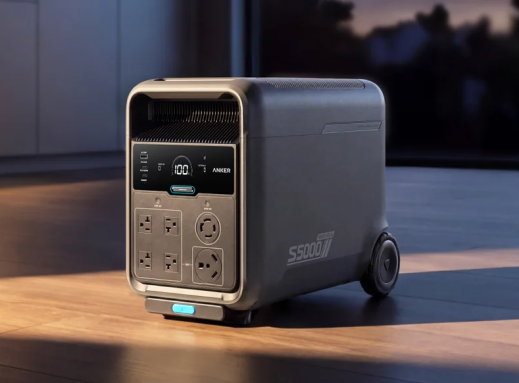
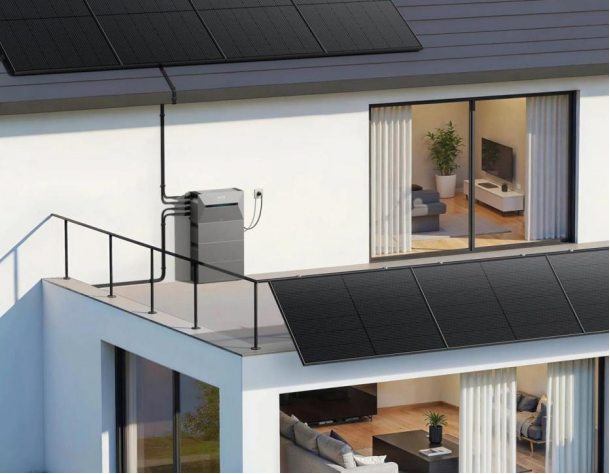
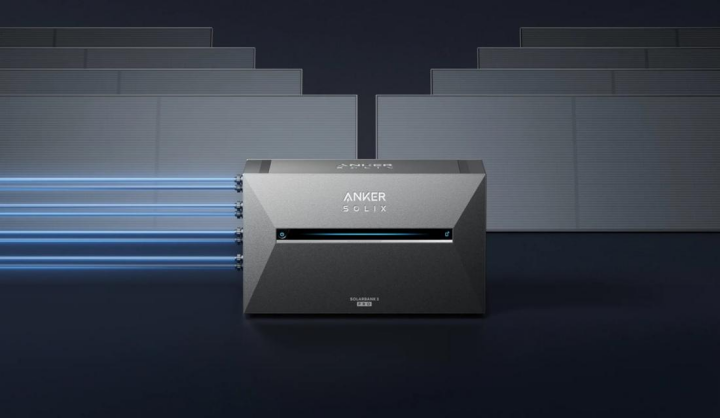
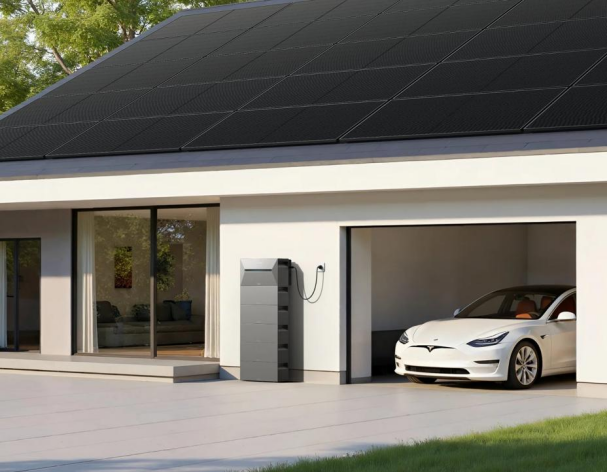
Alt: Anker SOLIX S5000
What Is a Portable Power Station and How Does It Work?
A portable power station is a rechargeable battery-powered device that stores electricity and supplies it through AC outlets, USB ports, and other connections. Unlike traditional generators, it doesn't need fuel combustion to produce electricity during use.
Portable power stations are available in sizes ranging from compact units for personal electronics to high-capacity systems designed for household backup.
Main Components and How They Supply Electricity
A portable power station contains several components that work together to store and deliver energy:
l Battery pack: Stores electrical energy, typically using lithium-ion or lithium iron phosphate (LFP) cells.
l Inverter: Converts stored DC electricity into AC electricity for household appliances.
l Battery management system (BMS): Monitors battery temperature, voltage, and current to support safe operation.
l Output ports: Deliver electricity through AC outlets, USB connections, and DC outputs.
l Charging controller: Manages incoming electricity from wall outlets, solar panels, or other compatible sources.
When you connect an appliance, the power station delivers energy from its battery through the appropriate output connection.
Portable Power Station vs. Traditional Generator
Both portable power stations and traditional generators supply electricity when grid power is unavailable, but they operate differently.
A portable power station stores energy in a rechargeable battery. It produces no exhaust during operation, runs quietly, and can be used indoors when manufacturer safety instructions are followed.
A traditional fuel-powered generator creates electricity by burning gasoline, propane, or another fuel. It can operate as long as sufficient fuel is available, but produces exhaust, noise, and requires regular maintenance.
Fuel-powered generators must remain outdoors because their exhaust contains dangerous carbon monoxide. Battery-powered stations avoid combustion-related exhaust but require recharging after their stored energy is depleted.
Common Uses for Home Backup and Outdoor Activities
Portable power stations support several everyday and emergency applications:
l Home emergencies: Keep refrigerators, routers, lights, and communication devices operating during outages.
l Camping and RV trips: Supply electricity for portable refrigerators, cooking equipment, and electronics.
l Outdoor work: Power compatible tools and equipment where electrical outlets are unavailable.
l Remote work: Maintain electricity for laptops, monitors, and internet equipment.
Their usefulness depends on the station's battery capacity and maximum output.
What Can a Portable Power Station Power?
A portable power station can run many common devices, from smartphones to household appliances. However, not every unit can support high-wattage equipment.
Before connecting a device, check its running wattage, startup power requirements, and compatibility with the station's outlets.
Small Electronics and Everyday Devices
Most portable power stations can charge smartphones, tablets, cameras, laptops, and other small electronics.
For example, a 1,000Wh power station theoretically stores enough energy to recharge a 50Wh laptop battery about 20 times. Actual charging cycles will be lower because some energy is lost during conversion and charging.
Refrigerators, Kitchen Appliances, and Power Tools
Larger portable power stations can operate household appliances, provided their power demands remain within the rated output.
Common examples include:
l Refrigerators: A compatible station can maintain refrigeration during outages, with runtime depending on compressor cycling and average consumption.
l Microwaves: Many models require approximately 1,000–1,500W of electrical input, depending on their specifications.
l Coffee makers: Typical heating elements may draw around 800–1,500W during operation.
l Power tools: Drills, saws, and other tools may require substantial running power and additional startup current.
High-power equipment drains batteries more quickly, even when the power station has sufficient inverter output to operate it.
How Long Can a Portable Power Station Run Appliances?
Runtime depends on battery capacity, appliance consumption, and energy conversion efficiency.
Use this formula:
Runtime (hours) = Battery capacity (Wh) × Efficiency ÷ Average power (W)
For example, a 2,000Wh station supplying a constant 200W load at an assumed 85% overall efficiency would last approximately 8.5 hours.
Actual runtime also depends on standby power consumption, operating temperature, and appliance cycling.
For refrigerators and similar equipment, average energy consumption provides a more useful estimate than maximum running wattage.
How to Choose the Right Portable Power Station
Choosing a portable power station starts with identifying which devices you need to power and how long you need them to run. Battery capacity, output wattage, charging speed, and portability all affect your decision.
Battery Capacity: Wh vs. W Explained
Watt-hours (Wh) measure stored energy, while watts (W) measure power output. A larger battery generally provides longer runtime, but the station must also deliver enough wattage to operate your appliances.
Estimate your required capacity by multiplying each device's average power consumption by its expected operating hours, then allow extra capacity for energy losses.
AC Output, Surge Power, and Battery Type
Continuous AC output determines which appliances a station can run simultaneously, while surge output accommodates brief startup demands from equipment such as refrigerators and pumps.
LFP batteries are worth considering because they offer long cycle life and good thermal stability. Choose a station with sufficient output and battery capacity for your intended use.
Charging Methods, Speed, and Solar Compatibility
AC charging is convenient at home, while solar charging helps replenish energy off-grid. Some stations also support vehicle or generator charging.
Check the maximum charging input and compatible voltage range before purchasing solar panels or accessories.
Portability, Safety Features, and Expandability
Smaller stations are easier to carry, while larger models may need wheels and handles. Look for battery protection, temperature monitoring, and overload protection.
If you anticipate needing more backup energy later, consider an expandable system that lets you increase storage without replacing the original unit.
Anker SOLIX S5000 for High-Capacity Home Backup
The Anker SOLIX S5000 is designed to support essential household appliances during power outages. It combines large battery storage with dual-voltage output, allowing users to operate compatible 120V and 240V equipment.
Its key advantages include:
l High-capacity battery: The 5,024Wh LFP battery stores substantial energy for refrigerators, lighting, and essential electronics.
l Powerful AC output: The 4,500W continuous output and 8,000W peak rating support demanding appliances and brief startup surges.
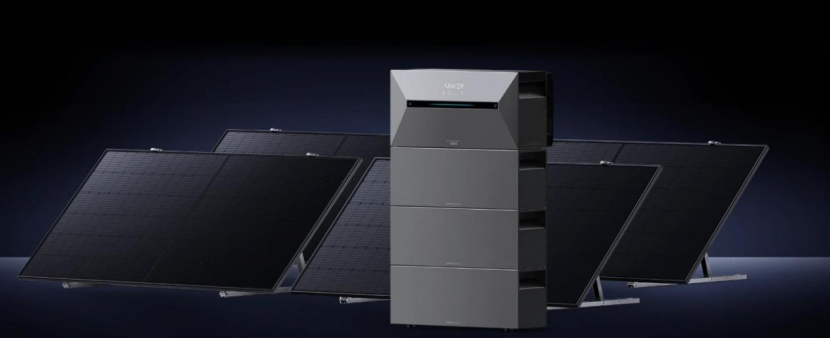
l Expandable storage: Capacity can increase from approximately 5kWh to 30kWh using compatible expansion batteries.
l Solar charging: Up to 3,000W of solar input provides a renewable charging option during extended outages.
l Long battery lifespan: The LFP battery is rated for up to 10,000 cycles before reaching 60% of its original capacity.
l Easy mobility: Built-in wheels and a pull handle help users move the 97 lb station across suitable surfaces.
The S5000 also supports 120V and 240V AC charging, allowing faster recharging with compatible electrical connections. Its smart app provides convenient monitoring of battery levels and energy consumption.
For homeowners who want extended backup capability and room for future expansion, the Anker SOLIX S5000 is a strong option.
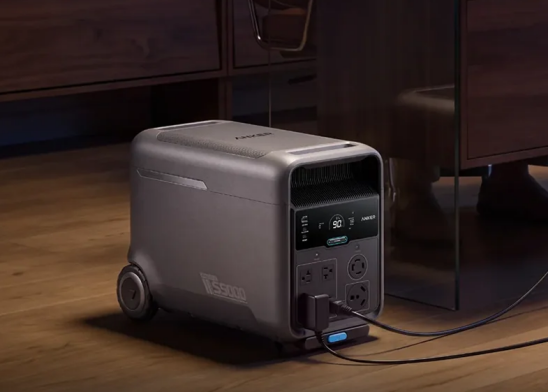
Alt: Anker SOLIX S5000 on ground
Conclusion
A portable power station offers a convenient way to store electricity for outages, camping, outdoor work, and everyday backup needs. Understanding battery capacity, AC output, charging methods, and runtime helps you select a system that supports your essential devices.
For households needing significant backup power, the Anker SOLIX S5000 combines high output, expandable storage, and flexible charging. Before purchasing any power station, calculate your appliances' energy consumption and choose a model with enough capacity and output to meet your requirements.